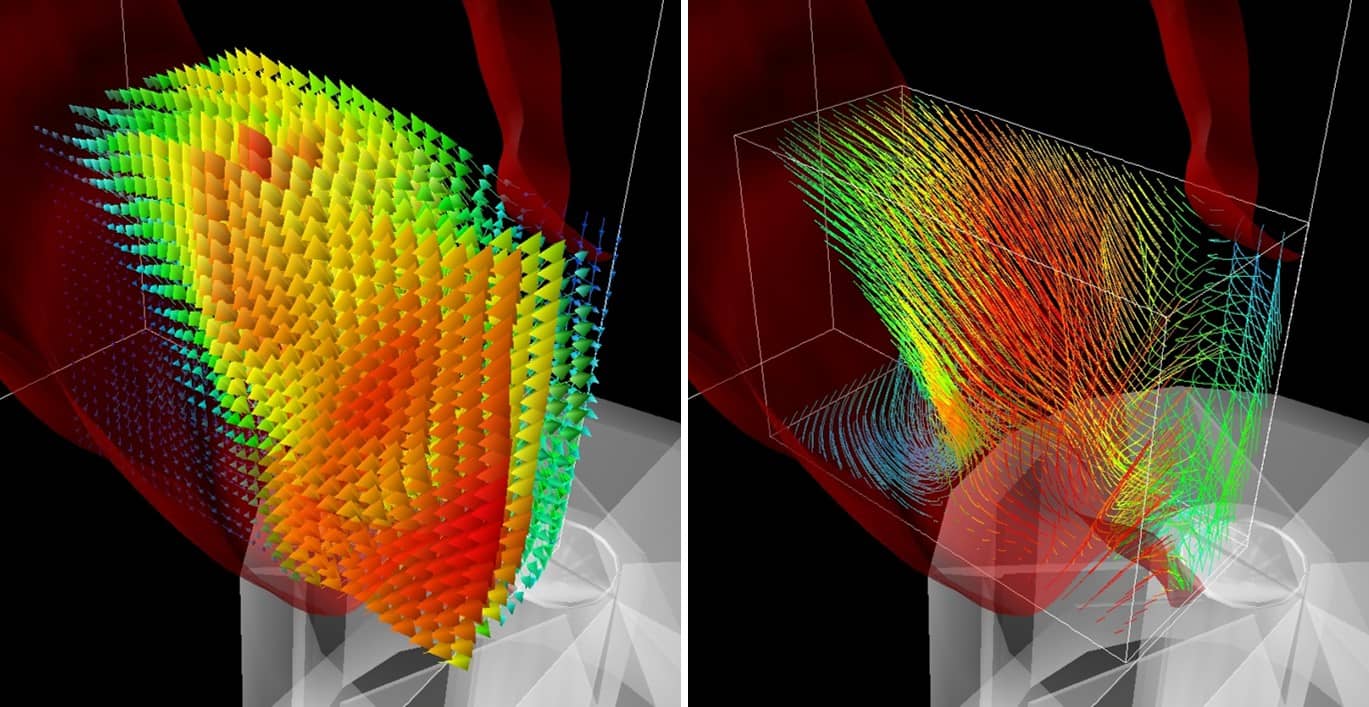
Although Direct Numerical Simulation (DNS) allows highly accurate simulation of turbulent combustion fields, the enormous computational cost limits the size of the computational domain. In contrast, experiments—while limited in the measurable physical quantities—can target combustors of realistic dimensions. Thus, combining approaches from both DNS and experiments is extremely important in turbulent combustion research. In our laboratory, turbulent combustion fields are measured using various laser diagnostics, such as stereo PIV and planar laser-induced fluorescence (PLIF) for chemical species, described below.
Laser Diagnostics in Turbulent Combustion Fields
1. Research Background
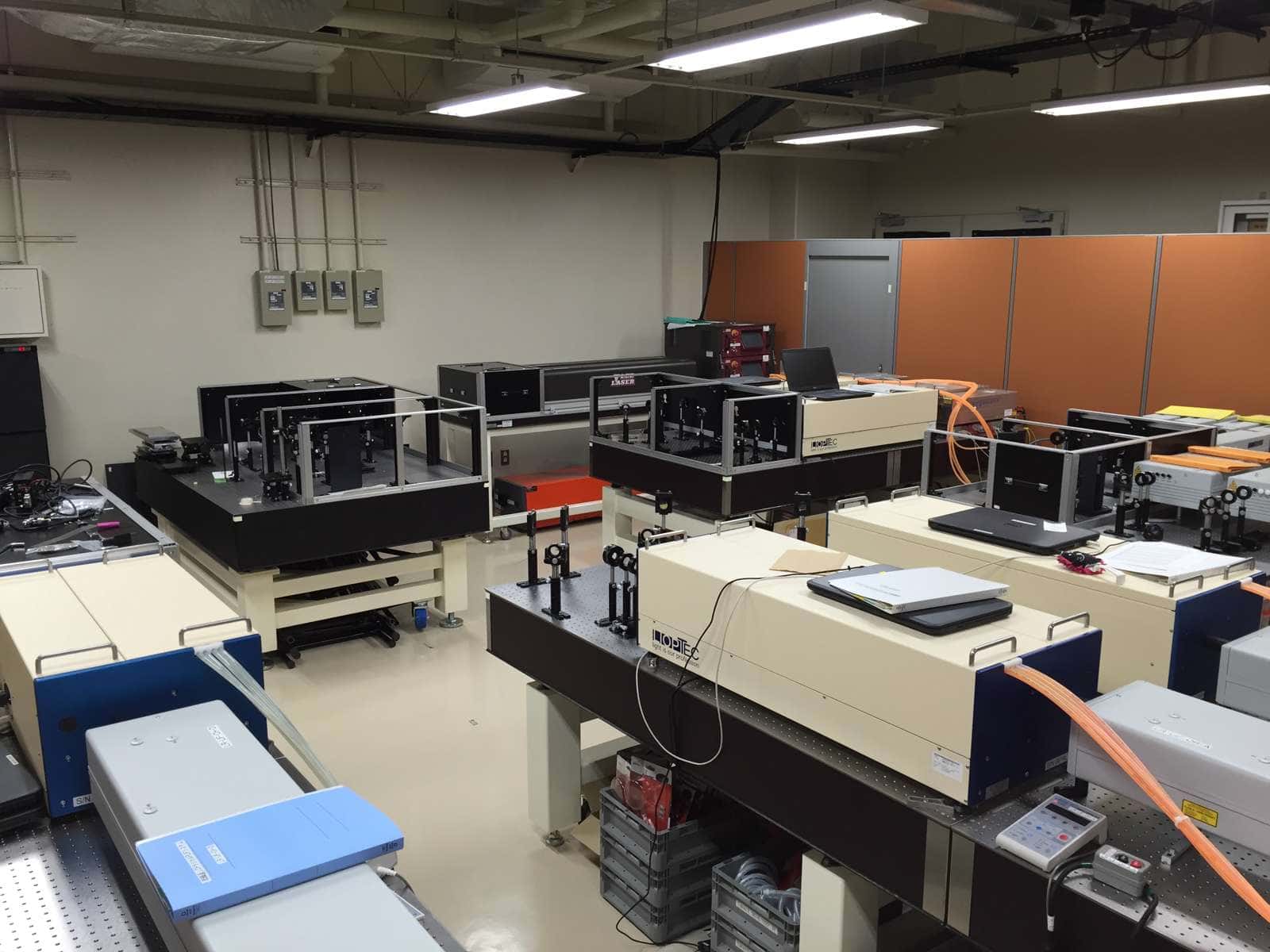
2. Planar Laser-Induced Fluorescence (PLIF)
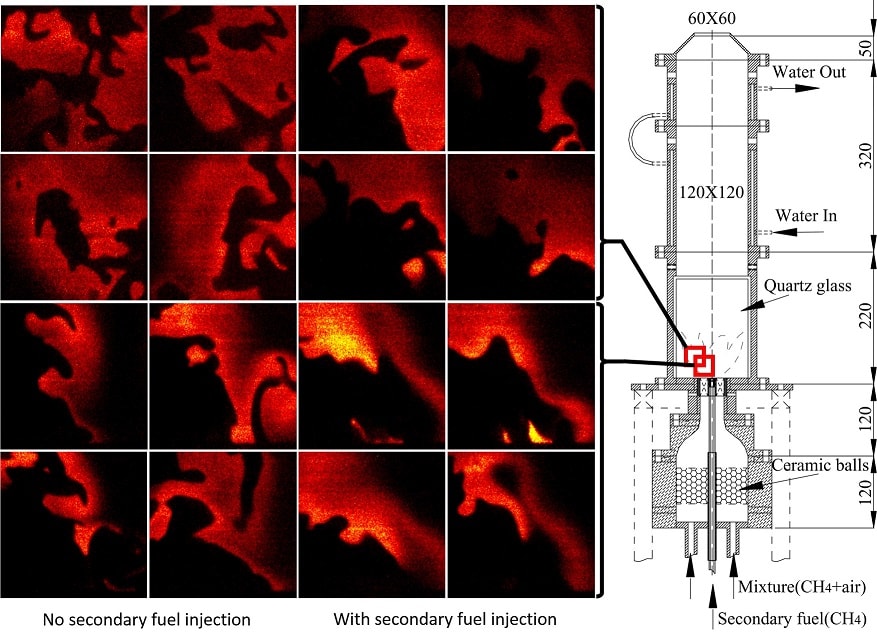
In typical fuel combustion, tens to thousands of chemical reactions occur. Among these, intermediate species and radicals—such as CH and CH2O located within the reaction zone, or OH radicals formed in the burned gas region—can be measured to visualize instantaneous turbulent flames. The technique used for such measurements is called planar laser-induced fluorescence (PLIF). In PLIF, a laser sheet of a specific wavelength is momentarily irradiated into the combustion field, exciting the target species (radicals or intermediates). When the excited molecules return to their lower energy states, they emit fluorescence, which is captured by a high-sensitivity camera. This allows measurement of the probability distribution of the target species within the laser sheet.
3. Examples of Measurement Results Obtained in Our Laboratory
By combining stereo PIV with species PLIF, both the velocity field and scalar (species) fields in turbulent combustion can be measured, enabling direct comparison with DNS results. By integrating the strengths of DNS and experimental diagnostics, our laboratory conducts comprehensive research activities aimed at deepening the understanding of turbulent combustion.